
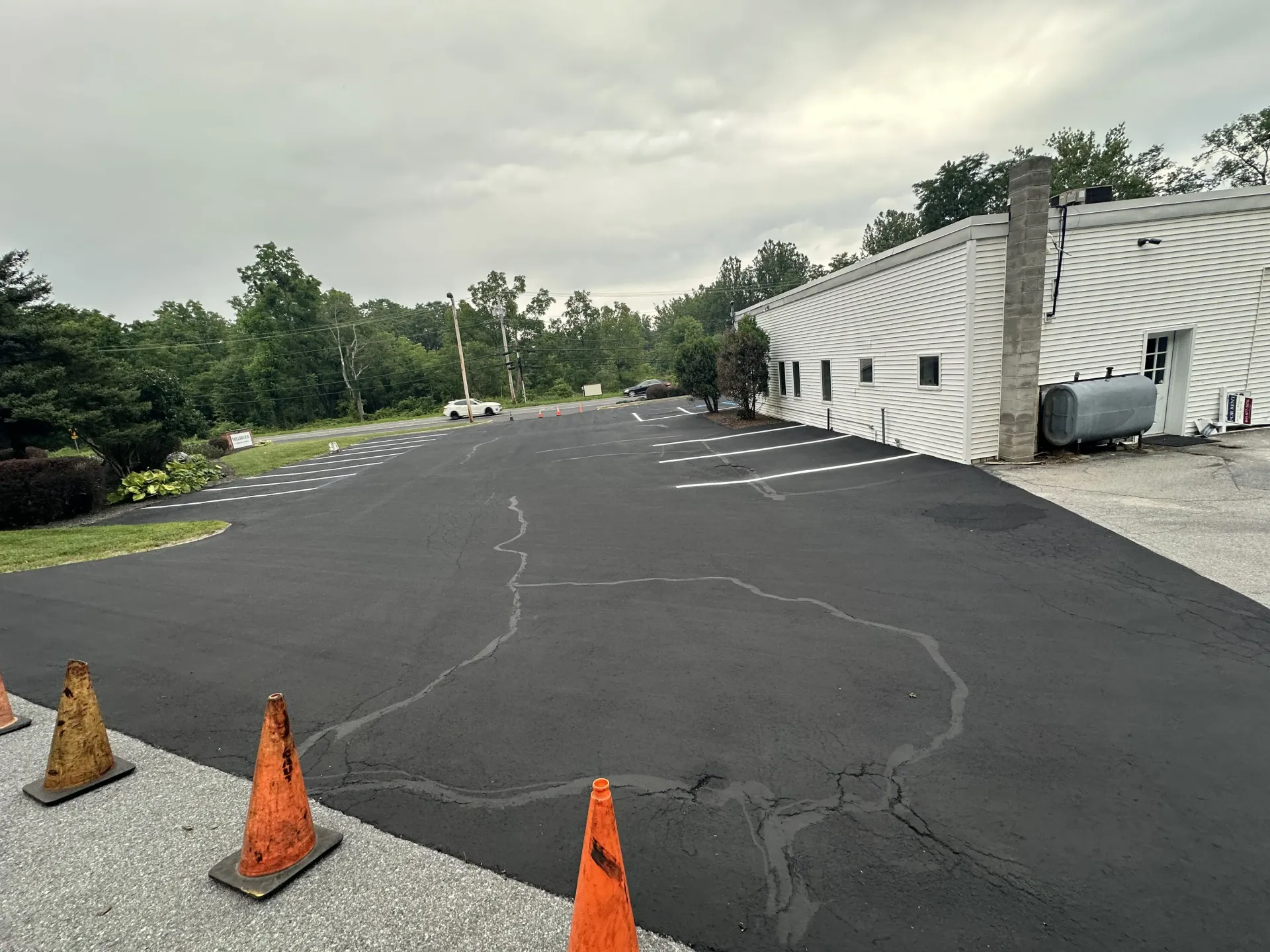
Pavement Protected Before Water Finds a Way In
Crack Filling in Wappingers Falls for driveways and parking lots showing early signs of linear surface breaks
Cracks in asphalt create direct pathways for water to reach the base material, where it causes far more damage than surface wear alone ever could. Once water saturates the stone base and freezes during winter, it expands and displaces the material, leaving voids that cause the pavement above to settle and crack further. You need crack filling when you notice linear breaks wider than a hairline, when small cracks begin branching into Y-shapes, or as a preparation step before sealcoating to ensure the protective coating bonds to a sealed surface rather than one with open seams.
Nick Moustakas Blacktop Sealcoating seals these cracks using hot-pour rubberized filler that remains flexible through temperature swings and bonds to the crack walls to prevent water penetration. The clean application process keeps filler within the crack rather than smeared across surrounding pavement.
Request a detailed estimate based on your pavement's current crack pattern and maintenance history.
What Crack Filling Actually Accomplishes
The filling process starts with cleaning debris and vegetation from the crack using compressed air or mechanical tools, which ensures the filler bonds to asphalt rather than to loose dirt. Hot-pour rubberized material gets applied into the crack cavity, where it flows down and fills the space completely before cooling and hardening into a flexible seal that moves with the pavement during expansion and contraction cycles.
After the filler cures, water runs across the sealed crack instead of draining into it and reaching the base. The pavement maintains a smoother, more uniform appearance, and the sealed cracks stop widening from freeze-thaw action. When sealcoating is applied afterward, the filled cracks remain sealed underneath the protective coating layer, creating a continuous barrier against moisture infiltration across the entire surface.
This service works effectively for residential driveways, commercial parking lots, and other paved areas showing early-stage cracking. Addressing cracks before they widen significantly extends the pavement's overall lifespan and delays the need for more extensive structural repairs.
Homeowners and property managers often ask about the best timing for crack filling, how it differs from other repair methods, and what results to expect.
Common Questions About This Service
What makes hot-pour crack filler better than the cold-pour material sold at hardware stores?
Hot-pour rubberized filler remains flexible across a wider temperature range and bonds more effectively to the crack walls, while cold-pour products harden and become brittle in freezing weather, which causes them to crack and pop out during the first winter season.
How soon after crack filling can sealcoating be applied?
Most hot-pour fillers cure within 24 hours, allowing sealcoating to proceed the next day if weather permits, though some property owners prefer waiting a few days to ensure the filler has fully hardened and will not be displaced by the sealcoating squeegee.
Why do some cracks reappear after being filled?
Cracks that reopen typically indicate continued movement in the pavement caused by base instability or settlement—the filler seals the surface gap but cannot stop the underlying structural shifts that originally created the crack.
When is the best time of year to fill cracks in Wappingers Falls?
Late spring through early fall provides the temperature stability needed for proper filler application and curing, avoiding the rapid temperature swings of early spring and late fall that can prevent the material from bonding correctly before it hardens.
How does crack filling fit into a complete pavement maintenance plan?
Filling cracks addresses immediate water infiltration risks, sealcoating protects the entire surface including filled cracks, and repeating both services on a regular two-to-three-year cycle prevents minor damage from accumulating into structural failures that require expensive replacement.
Nick Moustakas Blacktop Sealcoating provides free estimates that include recommended maintenance schedules tailored to your pavement's age and condition. Call (845) 635-8890 to arrange an inspection and discuss the most effective maintenance approach for your property.